Separate appearance from function
Cabinet painting addresses the appearance of suitable existing cabinets. It does not change a kitchen’s layout, enlarge drawers or repair a fundamentally damaged cabinet box. Start by identifying what bothers you: color and finish, storage, hardware, structural condition or all of these together.
If the layout works and the cabinets are sound, refinishing may be worth discussing. If the boxes are damaged or the storage arrangement no longer meets your needs, painting alone may not solve the problem. An honest comparison begins with condition and function rather than a blanket claim that painting is always better.
Identify the existing material and coating
Solid wood, veneers, laminate and previously painted surfaces can require different preparation and coating decisions. Tell the painter what you know about the cabinets and any prior refinishing. A glossy or contaminated finish can create adhesion problems if the new coating is selected without evaluating the existing surface.
Photograph worn edges, loose veneer and areas near sinks and cooking appliances. Grease, moisture and cleaning residues matter. Ask whether the surfaces are suitable for the proposed system and what limitations remain after refinishing. Not every cabinet material can be treated as if it were unfinished wood.
Understand why preparation matters
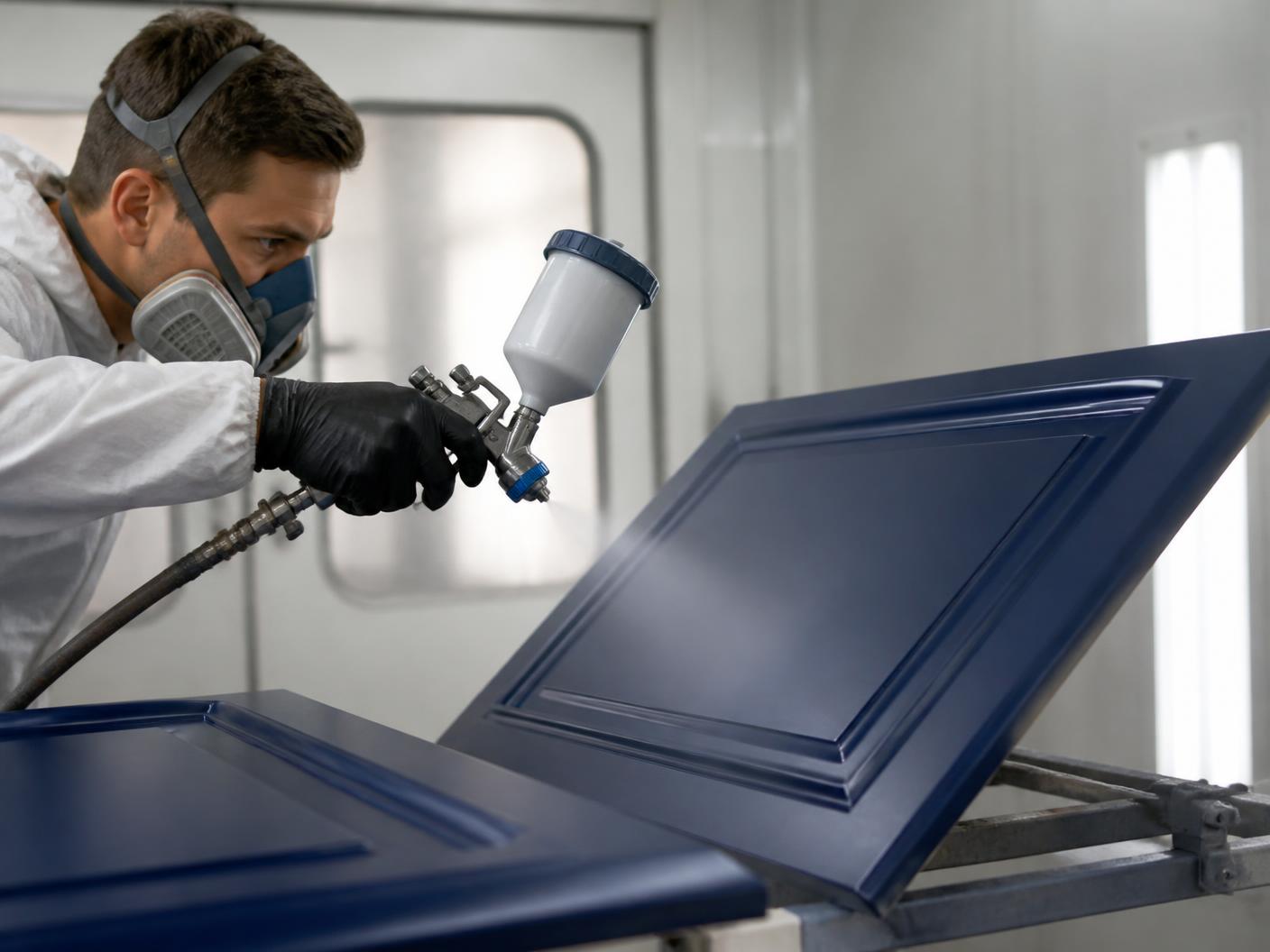
Cabinet work commonly involves careful cleaning, surface preparation and a coating system selected for the substrate. Door removal, hardware handling and protection should be defined in the scope. The amount of preparation and detail work is one reason a cabinet project cannot be evaluated like a simple wall repaint.
Ask which visible and hidden surfaces are included: door fronts, edges, backs, frames and interiors are separate decisions. Discuss how doors and drawers will be identified and reinstalled. A written surface list helps you compare proposals and avoids assuming every finish treatment includes the inside of every cabinet.
Plan for kitchen access and curing
Finishes can be dry to the touch before they reach their intended hardness. Product-specific instructions should guide handling, cleaning and return to ordinary use. Ask what the kitchen will look like during the project and how cooking, food storage and access to appliances will be affected.
Arrange a temporary plan for frequently used items before work begins. Keep pets and children away from the work area. Avoid reinstalling accessories or scrubbing a fresh finish early simply because the surface no longer feels wet. Follow the painter’s product-based care instructions.
Compare total scope, not assumed savings
Replacement can involve countertops, plumbing, layout changes or other trades, depending on the project. Painting can involve repairs, preparation and detailed coating work. Compare the actual written scopes instead of relying on a fixed percentage savings claim that may not apply to your kitchen.
Consider whether hardware changes are part of the plan and whether existing holes need treatment. Sample the proposed color next to countertops, flooring and lighting. A finish that looks good in isolation may read differently beside surfaces that are staying in place.
Bring the right details to the estimate
For cabinet painting in Holland and nearby Lakeshore communities, send A-1 an overview of the kitchen, close-ups of the current finish and your intended changes. Share whether interiors, doors, drawers and built-ins are part of the request. Condition and access help define the discussion.
A-1’s cabinets and maintenance service page explains the related refinishing offering. A consultation can help determine the painting scope, but replacement and structural renovation should be evaluated with the appropriate professionals when the project goes beyond changing a finish.