Inspect the deck beyond its color
A weathered deck is not always ready for a fresh coat of stain. Start with the boards, railings, steps and structural condition. Look for loose components, damaged wood and areas that remain damp. Coating work should follow necessary repairs, not disguise them.
If you suspect a structural issue, have it evaluated by an appropriate professional. Painting and staining are finish treatments, not a substitute for a safe structure. When requesting an estimate, include photographs of both the overall deck and problem areas so the scope conversation goes beyond choosing a color.
Identify what is already on the wood
An existing solid coating, semi-transparent stain and clear treatment may require different preparation and compatibility decisions. If you know the previous product, share the label or records. If you do not, ask how the surface will be assessed before a new system is chosen.
Applying a new stain over a failing or incompatible finish can undermine the result. Some projects need more removal or preparation than others. Ask which steps are included and what appearance limitations remain, especially where old coatings, repairs or differently aged boards may affect consistency.
Treat cleaning and drying as part of the job
Cleaning removes contaminants, but overly aggressive methods can damage wood. The method should suit the material and the selected coating system. After cleaning, the wood must meet the product’s requirements for moisture and surface condition before application.
Do not assume a washed deck is ready simply because the surface looks dry. Shade, board thickness and weather affect drying. Ask how readiness will be assessed and whether the schedule can adapt when conditions are unsuitable. A rushed preparation sequence can negate the benefit of a carefully selected stain.
Choose appearance and protection together
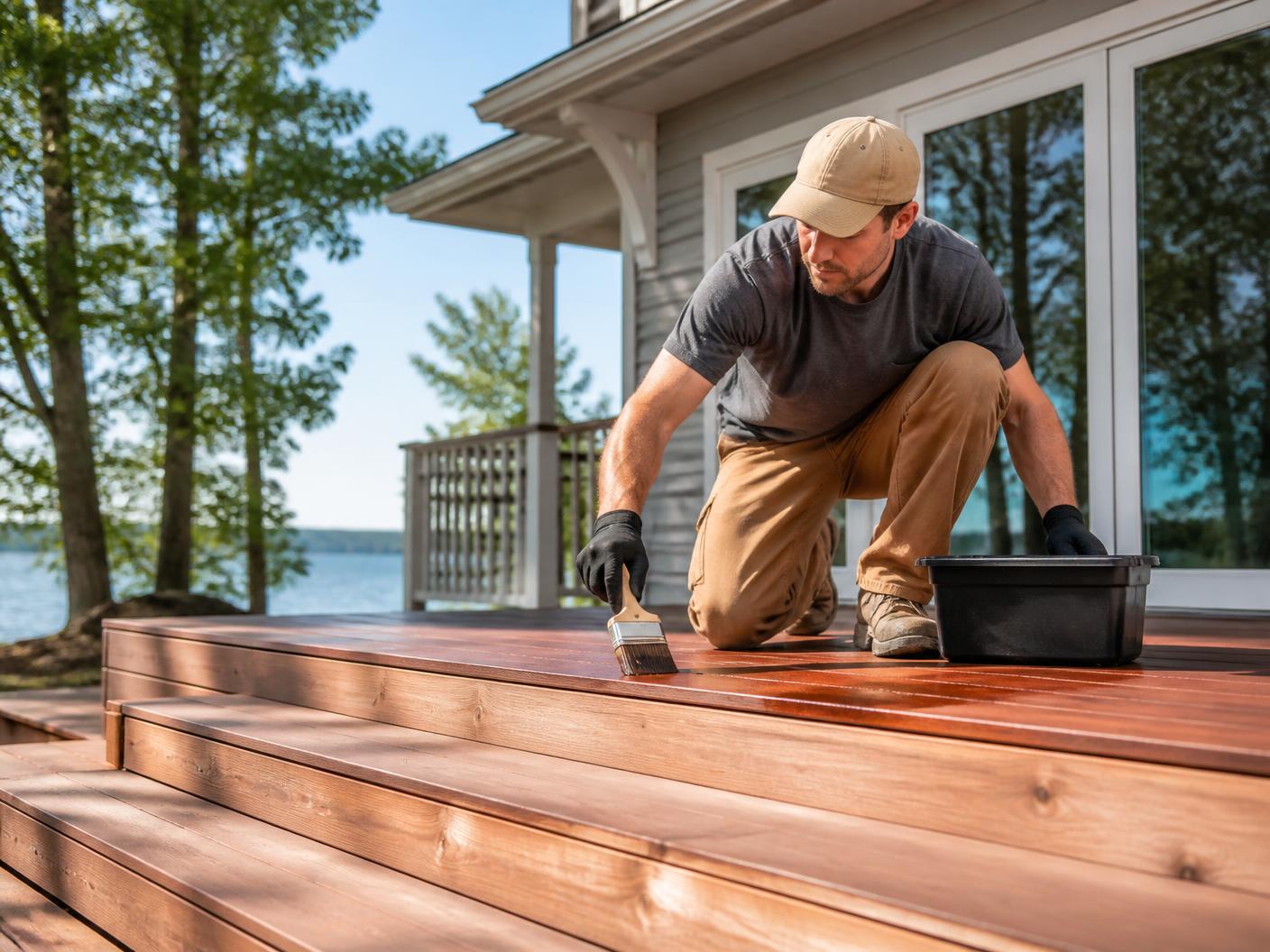
Different stain types reveal or conceal different amounts of wood grain. Choose based on the existing finish, wood condition and desired appearance rather than expecting every product to produce the same look. Sample a suitable product in an appropriate test area where practical.
Follow the manufacturer’s application instructions, including guidance on coats and excess material. More product is not automatically more protection. Ask what maintenance the selected system will need and how future recoating will be approached so the first project does not create surprises later.
Plan around weather and access
Deck staining depends on temperature, rain, humidity and drying requirements. In Grand Haven and nearby Lakeshore communities, plan around the actual forecast and product guidance instead of assuming a fixed seasonal date is always safe. Keep a weather allowance in your expectations.
Clarify when furniture can be returned and when steps or entrances can be used. If the deck is the main access point, agree on an alternative during treatment and drying. Pets, planters and outdoor rugs should stay clear until the finish can handle normal use.
Keep a maintenance record
Retain the stain name, color and completion details. Watch for wear, failed joints and persistent moisture during routine property checks. The need for maintenance varies by exposure, use, material and coating; avoid relying on a universal number of years between treatments.
A-1’s cabinets and maintenance offering includes deck staining and sealing. For a Grand Haven or Spring Lake project, send the address, deck photographs, known product history and your timing needs. The team can discuss the finish scope and any repairs that should be addressed separately.