Define the rooms and surfaces
A room-painting project can mean walls only, or it can include ceilings, baseboards, doors, closets and window trim. Make a surface-by-surface list before requesting an estimate. Note accent walls, tall stairwells and areas behind furniture. These details help avoid discovering halfway through the job that a surface was never included.
Photograph cracks, water marks, nail holes and damaged corners. A stain may need investigation before it can be covered, and a recurring crack may need more than cosmetic filling. Tell the painter what you have observed rather than assuming every problem is simply part of the painting process.
Agree on who moves what
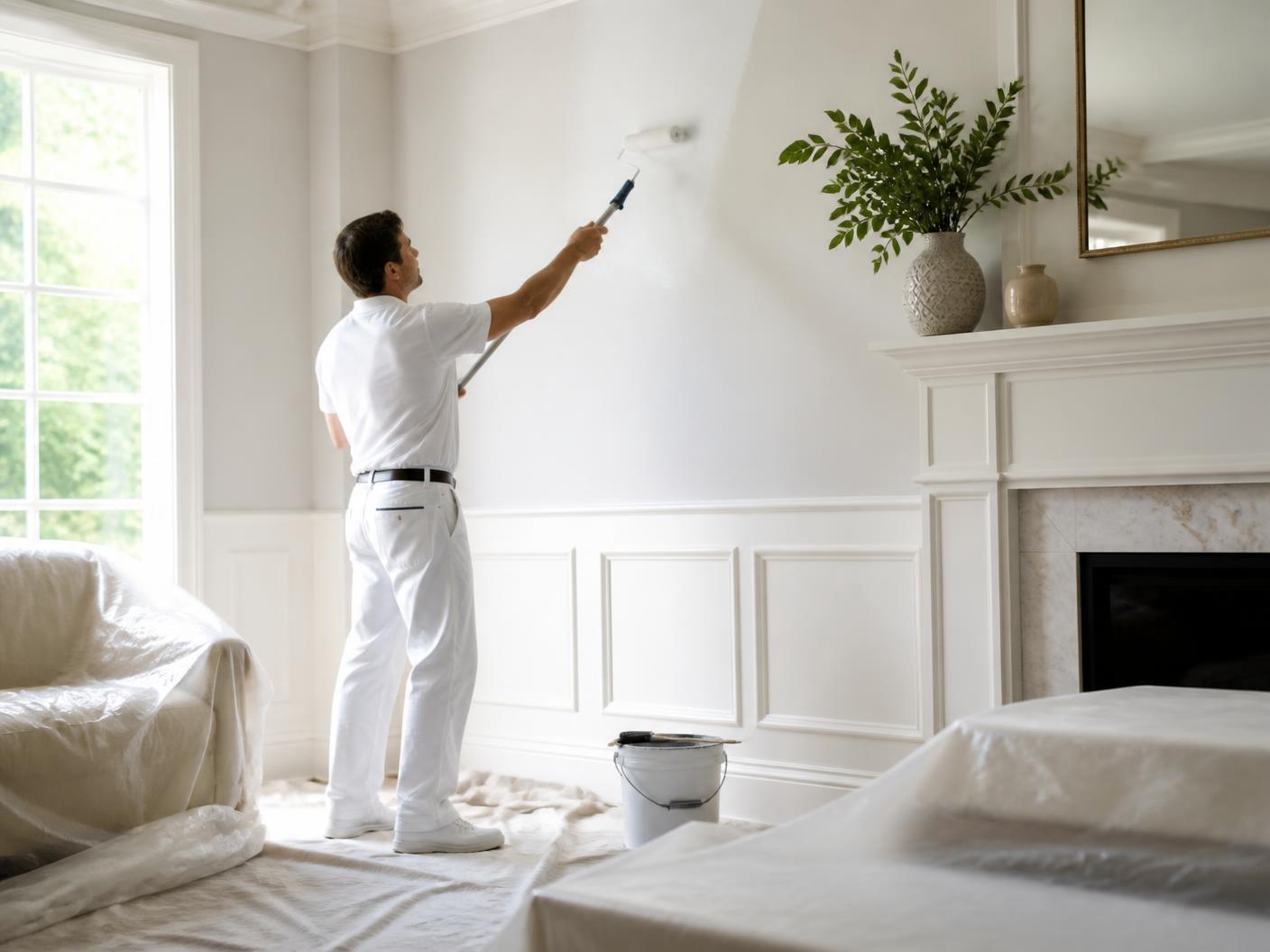
Ask whether furniture moving, curtain removal and fixture protection are included. Take down fragile artwork and personal valuables yourself unless another arrangement is clearly agreed. Empty bookshelves or cabinets when they affect access. The goal is a protected, accessible work area, not an assumption that the crew will handle every belonging.
Discuss heavy items that cannot easily be moved and where they can remain during the project. Protecting furniture is different from moving it to another floor. Confirm responsibilities before work starts, especially in apartments, occupied homes and rooms with limited storage space.
Choose color and sheen together
Color changes with light, surrounding furnishings and the existing wall texture. View a physical sample in the room in morning and evening light before approving a large order. If several rooms connect visually, consider their colors together rather than choosing each one in isolation.
Sheen affects appearance and cleaning. More reflective finishes can make some wall imperfections more noticeable, while suitability for frequent cleaning depends on the actual product as well as sheen. Ask for a finish appropriate to the room’s use instead of assuming one universal choice is best for every wall.
Plan access, ventilation and household routines
Tell the crew which entrances are available, where equipment can be placed and whether the home will stay occupied. Establish a plan for children and pets that keeps them away from tools, wet coatings and preparation dust. Identify work hours and rooms that need to remain accessible.
Ventilation and return-to-use instructions depend on the coating and application conditions. Follow product guidance and tell the painter about any particular household sensitivities. Low-odor or low-VOC descriptions do not mean a product is suitable for every person without precautions. Ask when the room can be used and when the finish can be cleaned.
Review older coatings before preparation
If your house was built before 1978, raise the possibility of lead-based paint before sanding or scraping begins. EPA lead-safe rules can apply to paid renovation and painting work that disturbs painted surfaces. The appropriate precautions depend on the property and scope, not simply on the color or appearance of the old paint.
For newer rooms, share any known wallpaper adhesive, smoke residue or previous coating problems. These conditions can change cleaning or priming requirements. Preparation should be discussed in the quote rather than treated as an invisible extra that only becomes clear once the room is emptied.
Use a final walkthrough to close the scope
Before completion, review the surfaces included in the proposal under normal room lighting. Ask about any remaining touch-ups, cleanup and drying requirements. Keep a record of the approved colors and products so future maintenance does not rely on guessing from a faded sample.
For interior painting in Kalamazoo, Portage or nearby communities, A-1 can discuss room updates alongside drywall, plaster and trim preparation. Send your room list, photographs and preferred timeline. A clear starting checklist makes the estimate more useful and helps coordinate the work around your household.